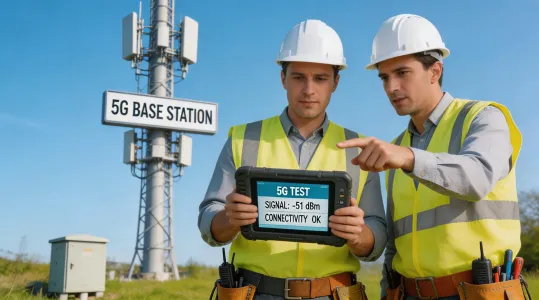
From telecom infrastructure rollouts to advanced research laboratories, our instruments address measurement challenges across the engineering spectrum.
Spectrum analyzers, OTDRs, and signal generators that support cell site commissioning, fiber link certification, interference mitigation, and protocol conformance testing for 4G LTE, 5G NR, and fixed broadband networks.
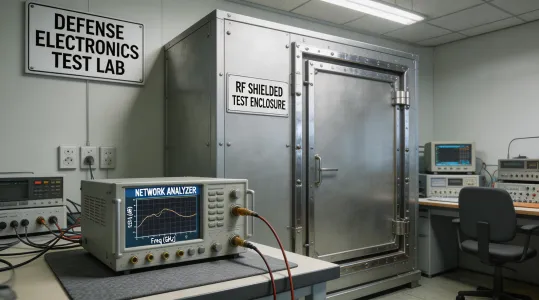
MIL-STD-810 rated instruments for radar waveform characterization, EW signal analysis, satellite uplink/downlink verification, and environmental testing under extreme temperature and vibration conditions.
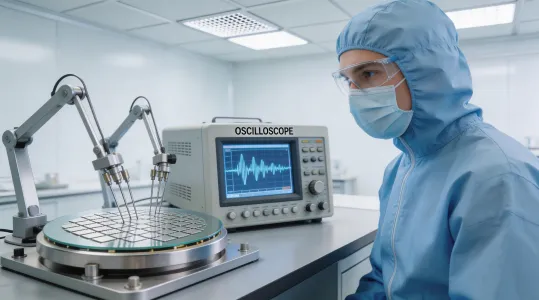
High-bandwidth oscilloscopes and network analyzers for die-level characterization, high-speed SerDes compliance (PCIe, USB, Ethernet), power integrity analysis, and production parametric test.
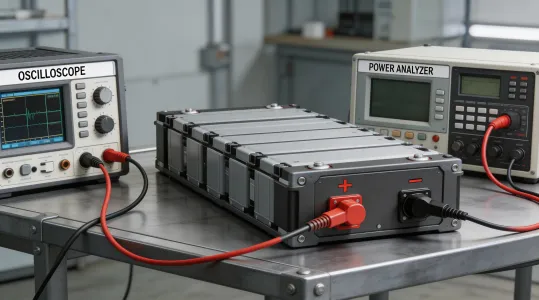
Bus protocol analyzers (CAN/LIN/FlexRay/Ethernet), power analyzers for drivetrain efficiency, and oscilloscopes for ADAS sensor validation. Supporting ISO 26262 functional safety verification workflows.
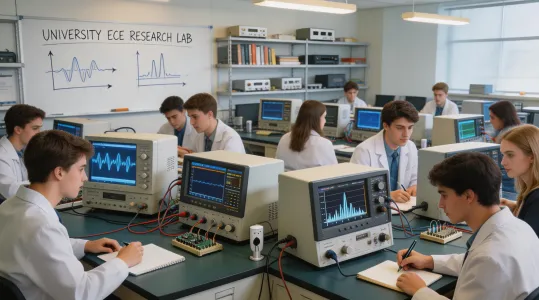
Flexible, upgradeable instruments that scale with research needs. Multi-user license software, remote access capability, and academic pricing programs for university EE, physics, and optics departments.
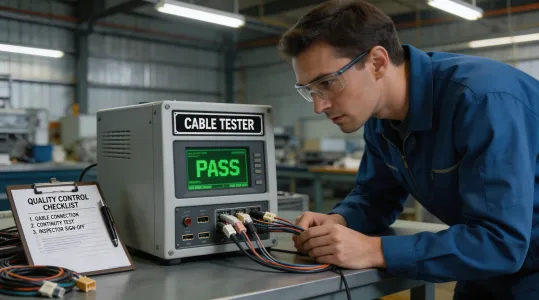
In-line and end-of-line test solutions including cable testers, power meters, and data loggers. Automated pass/fail reporting integrates with MES platforms for full traceability.
Different industries prioritize different measurement attributes. Understanding these trade-offs helps select the right instrument configuration.
| Selection Factor | Telecom / Fiber | Aerospace / Defense | Semiconductor | Automotive |
|---|---|---|---|---|
| Primary measurement priority | Signal integrity over long links (insertion loss ≤ 0.3 dB per connector, return loss ≥ 50 dB) | Wideband signal characterization under extreme conditions (-40 to +55 °C) | Timing precision at GHz speeds (jitter < 1 ps RMS for SerDes validation) | Multi-protocol bus decoding with voltage tolerance (CAN: 0-5V, LIN: 0-18V) |
| Typical dynamic range needed | ≥ 40 dB for OTDR fault detection over 80 km spans | ≥ 70 dB for low-probability intercept radar analysis | ≥ 50 dB for power integrity noise floor measurement | ≥ 60 dB for EMI pre-compliance screening |
| Portability vs. precision trade-off | Field-portable instruments preferred (battery-operated OTDR, handheld spectrum analyzer) | Lab-grade precision required; portability secondary | Bench-only; wafer probing demands fixed mechanical platforms | Mixed: bench for R&D, portable for production-line QA |
| Calibration criticality | Annual (ISO 17025); field units may need 6-month cycles | Mandatory per contract (MIL-STD-45662A or equivalent) | Critical for correlation between design and production sites | ISO/TS 16949 mandates documented calibration traceability |
Our applications engineers understand the testing requirements specific to your industry. Let us help you find the right instrument.
Contact an Application Engineer